Material selection is becoming one of the most important decisions in construction. In Switzerland, where buildings must meet high expectations for quality, durability, climate performance and resource efficiency, the question is no longer only what can we build with? It is also: what impact does this material have over its full life cycle?

Choosing better materials: Why sustainable construction starts before the first brick is laid
02 | 06 | 2026
Inclume.co.uk
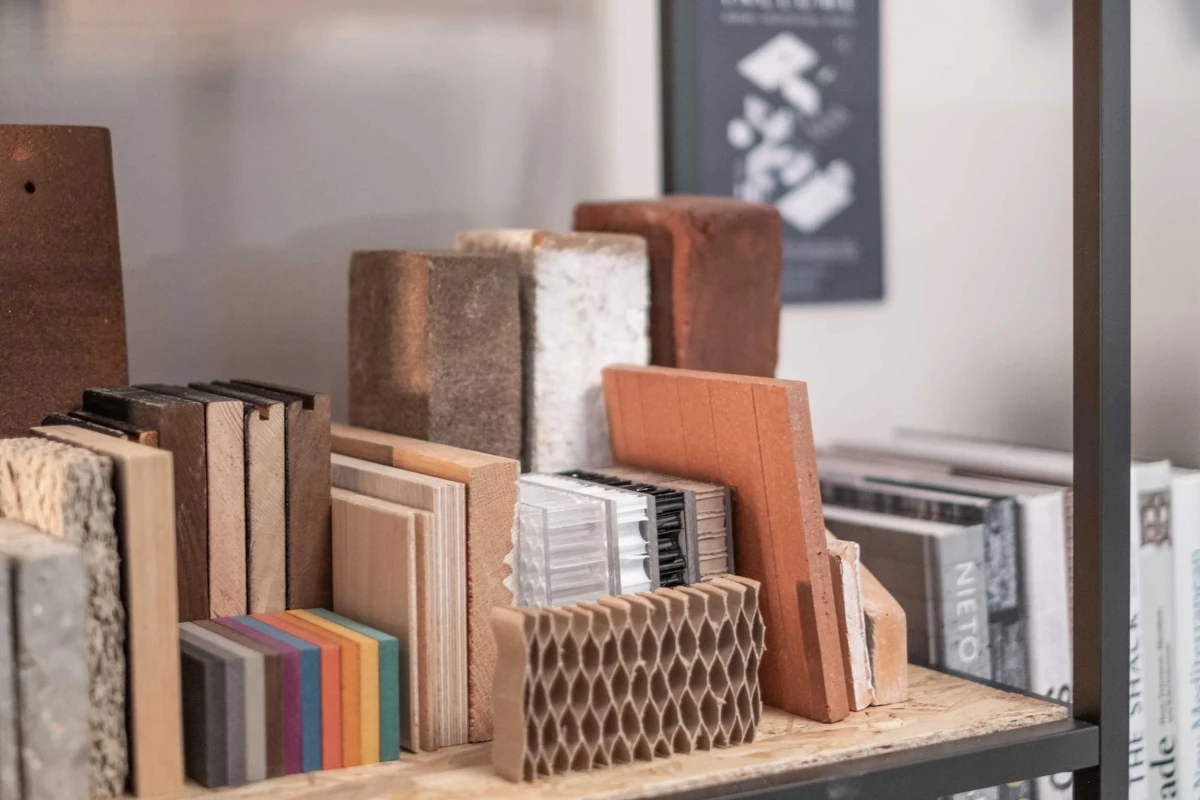
Every building begins with a series of choices. Some are visible: the form, the facade, the interior finishes. Others are less visible, but often more important: the materials we use, where they come from, how they are produced and what happens to them after use.
In Switzerland, these choices are becoming increasingly relevant. Climate targets, public procurement rules, life-cycle assessment methods and new planning standards are shifting attention from operational energy alone to the full environmental impact of buildings. For material producers, this creates both pressure and opportunity: those who invest in lower-carbon, circular and resource-efficient materials today are better positioned for the construction market of tomorrow.
The hidden impact of material choices
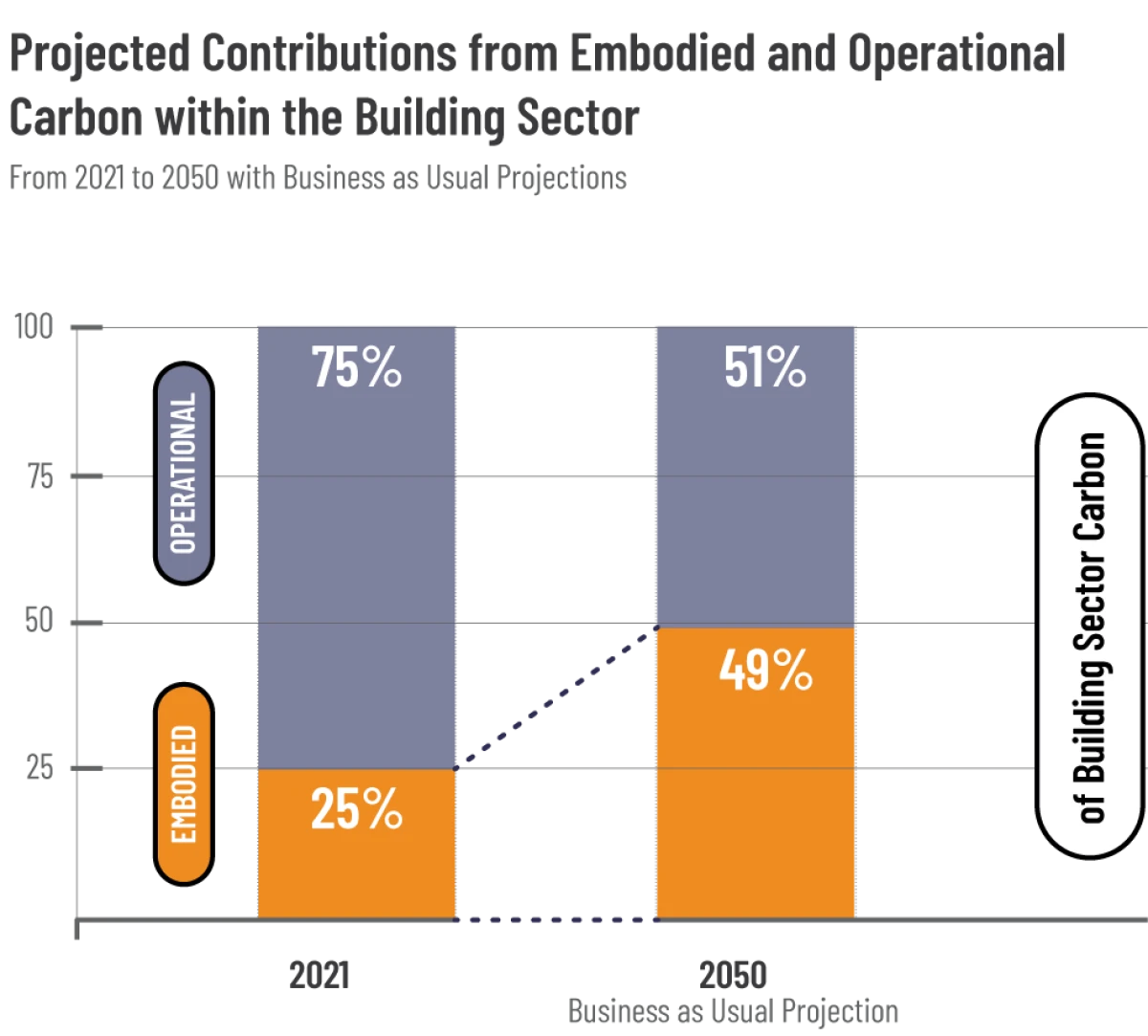
For many years, sustainable building mainly focused on energy efficiency during operation. Better insulation, efficient heating systems and renewable energy have played an important role in reducing the footprint of buildings. But as operational emissions decrease, the impact of construction materials becomes harder to ignore.
United Nations Environment Programme. Building Materials and the Climate: Constructing a New Future. Nairobi. 2023. Available online: https://wedocs.unep.org/20.500.11822/43293
Cement, concrete, steel, insulation, finishes and transport all contribute to the embodied carbon of a building: the emissions caused before the building is even used. Globally, buildings and construction are responsible for a large share of energy-related CO₂ emissions, with materials and construction accounting for a significant part of that footprint.
In a country like Switzerland, where building standards are high and space is limited, material efficiency matters. Every tonne of raw material extracted, processed, transported and installed has an environmental cost. The good news: every material choice is also a chance to reduce that impact.
Why this matters in Switzerland
In Switzerland, sustainable material selection is becoming increasingly important because environmental performance is no longer only a design ambition, it is becoming a measurable requirement. New and existing instruments such as SIA 390/1:2025 “Klimapfad Gebäude”, KBOB and ecobau life-cycle assessment data, the revised CO₂ Act, the Climate and Innovation Act, and sustainability criteria in public procurement are all pushing the construction sector towards lower-carbon, resource-efficient and circular solutions. These frameworks help planners, developers and public clients compare materials not only by price and technical performance, but also by their climate impact, resource use and contribution to long-term sustainability targets.
Why green materials are a business opportunity
For material producers, this shift creates both pressure and opportunity. On one hand, producers are increasingly expected to provide transparent environmental data, reduce CO₂ emissions, use resources more efficiently and align their products with life-cycle-based planning and procurement requirements. Materials without credible sustainability performance may become less competitive, especially in projects driven by public clients, climate targets or ESG reporting. On the other hand, producers who invest early in greener materials can strengthen their market position, differentiate themselves from conventional solutions and become preferred partners for architects, contractors and developers looking for future-proof products. Sustainable material development is therefore not only a response to regulation, it is a strategic advantage in a construction market that is rapidly moving towards measurable impact, circularity and lower embodied carbon.
What makes a material sustainable?
A sustainable material is not defined by one single factor. A low-carbon material is not automatically sustainable if it depends on scarce raw materials, toxic additives or long transport routes. A renewable material is not automatically sustainable if it causes biodiversity loss or cannot be reused. A credible assessment must look at the full picture.
Climate impact and CO₂ emissions
The first question is often: how much greenhouse gas is emitted over the material’s life cycle? This includes raw material extraction, processing, production, transport, installation, use, maintenance and end-of-life. For construction materials, the production phase can be particularly important, especially when high temperatures, chemical reactions or fossil fuels are involved.
Energy use during production
How much energy is needed to make the material? Is production energy-intensive, or can it happen at ambient temperature? Can renewable electricity be used? Lower energy demand usually means lower exposure to energy price volatility and lower environmental impact.
Origin of raw materials
Where do the inputs come from? Are they primary raw materials, virgin resources, industrial by-products or construction waste? A sustainable material should reduce dependency on scarce primary resources wherever possible.
Circularity and reuse
Can the material keep resources in the loop? Does it use recycled content? Can it be reused, repaired or recycled at the end of life? Circularity is especially important in Switzerland, where construction and demolition waste represents a major material stream.
Design for disassembly
A material’s sustainability is also influenced by how it is used in a building. If materials are glued, mixed or installed in ways that make future separation impossible, reuse becomes difficult. Design for disassembly helps preserve value beyond the first life cycle.
Health and toxicity
Sustainable materials should be safe for workers, users and the environment. This means considering dust, emissions, additives, leaching behaviour, indoor air quality and potential toxicity throughout the material’s life cycle.
Water consumption
Water use is often overlooked. Depending on the material and production process, water demand can be significant. In a changing climate, efficient water use will become increasingly relevant.
Biodiversity and land use
Raw material extraction, forestry, mining and land conversion can affect ecosystems. A sustainable material should minimise damage to habitats and support responsible sourcing.
Transport distances
Even a low-impact material can lose part of its advantage if it travels long distances. Local production, regional raw materials and short supply chains can significantly improve the environmental balance and decrease costs.
Performance and durability
A material must still do its job. Durability, robustness and technical performance are essential. A material that fails early or requires frequent replacement is rarely sustainable in practice.
The key question: can sustainability scale?
At Oxara, we believe that sustainable materials must work beyond prototypes and flagship projects. To create real impact, they must be scalable, technically reliable and compatible with how the construction industry actually builds.
This is where many promising solutions struggle. They may work in a lab, but require new production infrastructure, special handling, high costs or complex changes on site. For large-scale adoption, sustainable materials must fit into existing value chains.
Where Oxara comes in
Oxara develops cement-free and circular binder solutions that enable the production of low-carbon building materials using demolition waste.
Our technology turns mineral waste streams into valuable binders for applications such as lean concrete, flowable fill, encasement concrete, pavers, blocks and non-load-bearing elements. Instead of relying on energy-intensive cement, our solutions are based on a low-energy process and the reuse of locally available mineral resources.
Discover our products
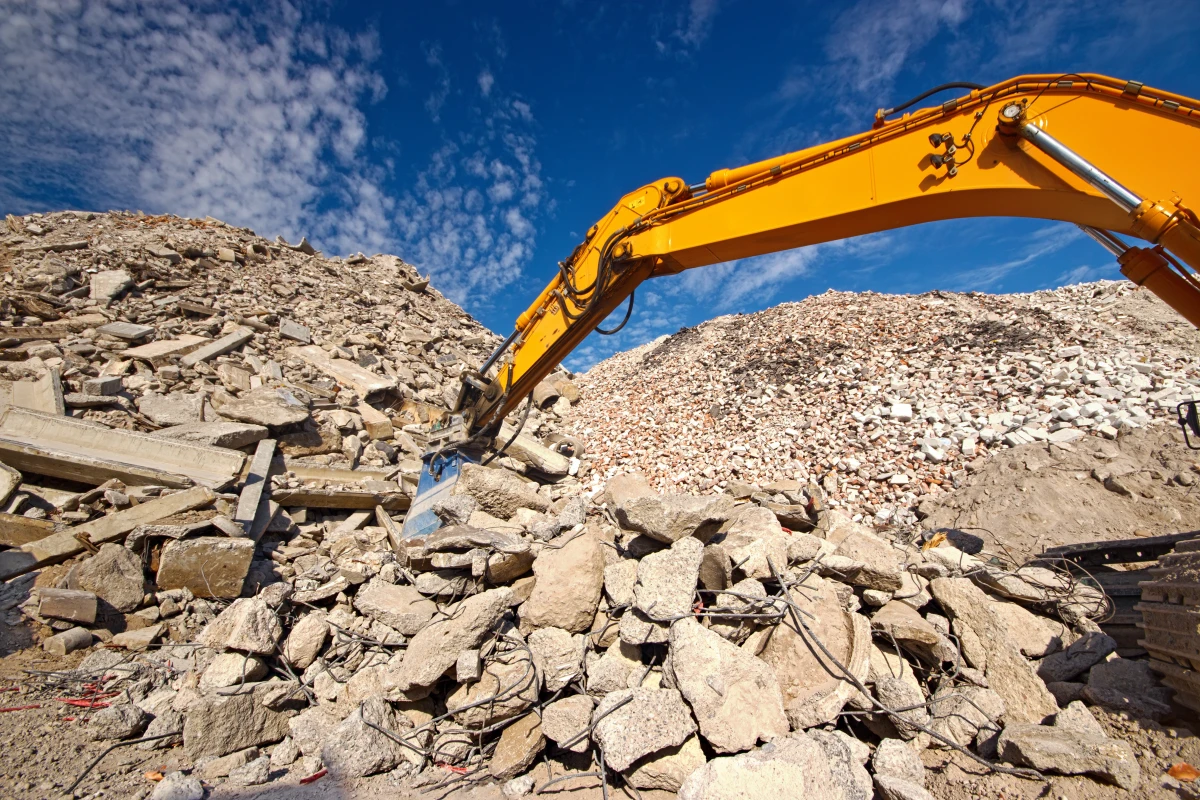
This directly addresses several key aspects of sustainable material selection:
Lower CO₂ emissions: Oxara binders can significantly reduce the climate impact of selected applications compared with conventional cement-based systems.
Circular raw materials: Our solutions enable the reuse of mixed demolition and excavation materials, keeping resources in the construction loop and saving natural resources.
Local value creation: By using regional waste streams and existing production infrastructure, our approach supports shorter supply chains and local material ecosystems.
Compatibility with existing processes: Our materials are designed to work with conventional mixing, transport, pumping and casting processes, depending on the application.
Scalability: We focus on applications where large material volumes meet realistic performance requirements, because this is where climate impact can be reduced at scale.
Credibility through data: Life-cycle assessment and third-party testing are central to building trust in alternative materials.
Better materials, better buildings
The future of construction will not be defined by one single material. It will be defined by better decision-making. Sometimes the best solution will be timber. Sometimes it will be reused components. Sometimes it will be low-carbon concrete, earth-based materials, recycled aggregates or hybrid systems. What matters is choosing the right material for the right application, based on performance, availability, environmental data and long-term value.
For Switzerland, this is especially important. The country has the technical knowledge, regulatory frameworks and industrial capacity to lead the transition towards more circular and climate-conscious construction. But this transition depends on material producers, planners, contractors, developers and public clients working together.
At Oxara, we see material selection as one of the most powerful levers for reducing the impact of the built environment. By rethinking binders and turning mineral waste into new building materials, we help make sustainable construction more practical, scalable and measurable.
Because the buildings of tomorrow start with the materials we choose today.
Want to build something together?
Let’s talk – it starts with a message.