Dubai is entering another major phase of urban development. Its continued growth will require enormous quantities of construction materials - but will also generate substantial volumes of mineral waste. For Oxara, this combination creates an opportunity to establish a circular, low-carbon material industry at scale.

From demolition waste to new building materials: Oxara’s opportunity in the UAE
31 | 08 | 2026
At a glance
- Dubai’s continued growth is creating strong demand for construction materials while generating increasing volumes of mineral demolition waste.
- Oxara sees demolition waste as a locally available resource for producing low-carbon Oulesse® construction materials.
- The UAE’s competitive cement market is a challenge, but its established industrial infrastructure can accelerate local production and market entry.
- Oxara is building a local ecosystem of public authorities, material processors, manufacturers and construction companies, supported by Prototypes for Humanity.
- The scale of available materials and existing production capacity creates the potential to replicate the model rapidly and hyperscale Oulesse® across the region.
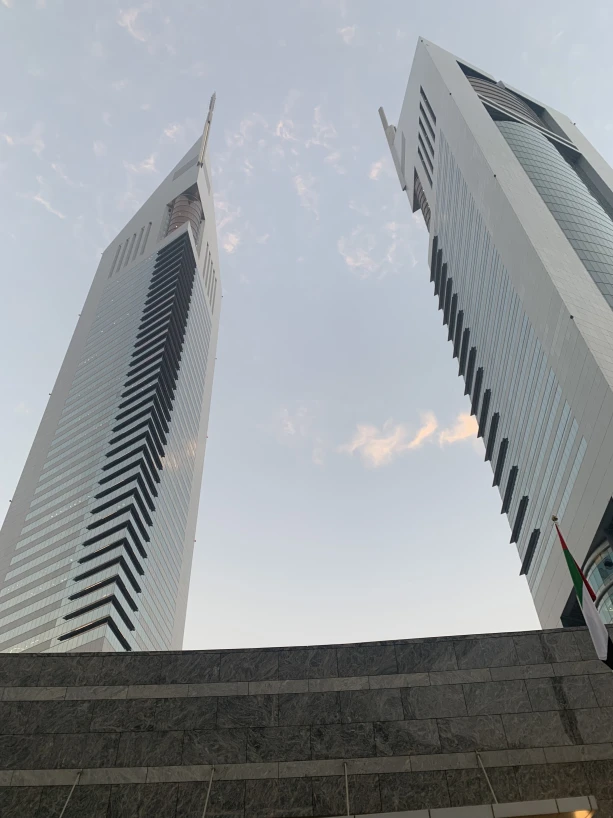
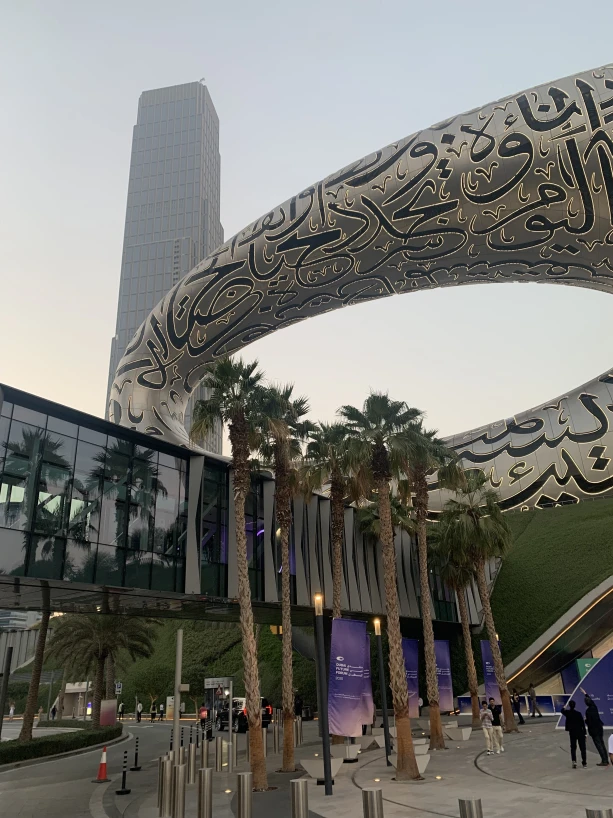
A growing city and a growing material challenge
Dubai is one of the world’s fastest-developing urban centres. Under the Dubai 2040 Urban Master Plan, its resident population is expected to increase from 3.3 million in 2020 to 7.8 million by 2040. The plan foresees further development concentrated around five main urban centres, alongside new housing, transport and infrastructure.[1]
However, Dubai is not only building new districts. Despite being a comparatively young city, existing buildings in strategically important locations are already being demolished to make space for denser and more modern developments.
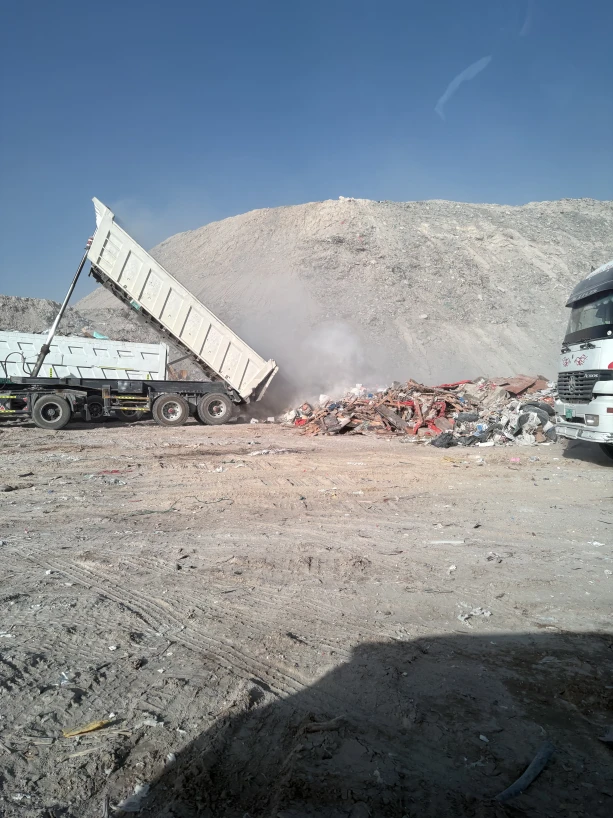
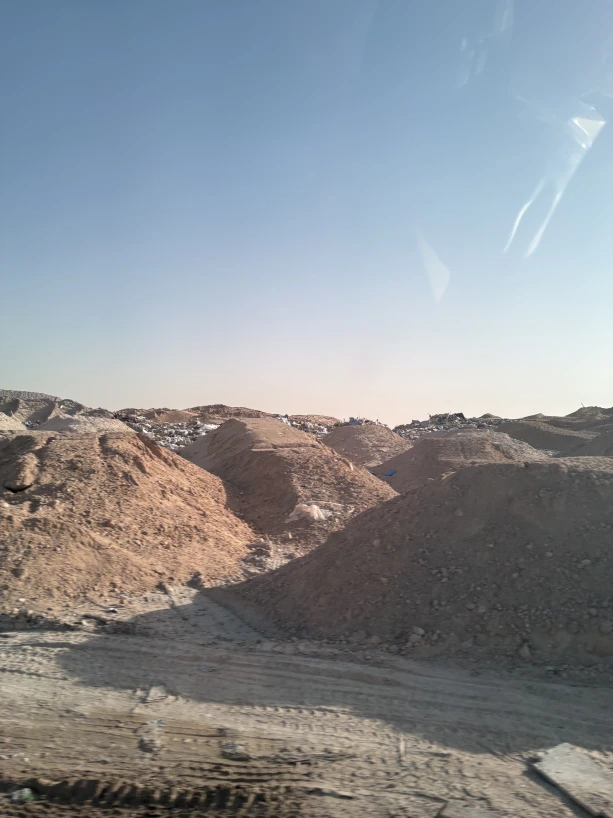
This creates a substantial and continuously replenished stream of construction and demolition waste. According to the UAE Circular Economy Policy, construction and demolition materials account for approximately 70-75% of the total mass of solid waste produced in the country.[2] Large quantities of this predominantly mineral material have historically been deposited in landfills or storage areas, even though they could potentially be processed and returned to the construction sector.
Dubai therefore faces two closely connected challenges: supplying the materials needed for its future growth and finding more productive uses for the materials recovered from its existing buildings.
For Oxara, demolition waste is not simply a disposal problem. It is a potential local raw material.
Sustainability must be economically competitive
The ambition to build more sustainably is clearly reflected in the UAE’s policy direction. Infrastructure is one of the priority sectors of the UAE Circular Economy Policy, while Dubai’s Integrated Waste Management Strategy 2021–2041 seeks to encourage innovation, recycling and practical long-term solutions to waste-related challenges.[2][3]
Nevertheless, environmental performance alone will not transform the construction market.
The UAE construction sector operates at considerable speed and is highly cost-sensitive. To achieve widespread adoption, low-carbon materials must be commercially attractive, technically reliable and compatible with established production and construction processes. Solutions that introduce significant delays, require entirely new infrastructure or result in substantially higher costs will struggle to move beyond individual showcase projects.
This is an important part of Oxara’s value proposition. Our technologies are being developed to turn locally available mineral waste into low-carbon construction materials while making use of familiar industrial equipment and processes.
Cement availability: a challenge and an opportunity
The UAE has a mature cement industry, substantial production infrastructure and a highly competitive regional market. Historically, installed production capacity has exceeded domestic demand, contributing to strong price competition and the availability of comparatively inexpensive conventional cement.[4]
For alternative binder technologies like our Oulesse® technology, this creates a clear commercial challenge. Oulesse® does not enter a market in which cement is scarce or prohibitively expensive. It must compete with a widely available incumbent material supported by established supply chains and decades of market experience.
At the same time, this industrial base presents an opportunity.
The UAE already has cement and grinding plants, mineral-processing equipment, concrete and precast production facilities, logistics networks and experienced construction companies. Parts of this infrastructure could potentially be used or adapted to process demolition materials and produce Oulesse® products.
The objective is therefore not necessarily to build an entirely separate production system. It is to identify where existing assets, expertise and supply chains can support a new generation of circular construction materials.
For investors, this distinction matters. Leveraging existing industrial infrastructure could reduce capital requirements, shorten implementation timelines and enable production to be replicated across several locations.
Building the local Oulesse® ecosystem
Oxara is currently developing the partnerships required to produce and use Oulesse® products in the UAE.
Oulesse® is particularly relevant to the region because processed mineral material from construction and demolition waste can become an important component of the product. The availability of large and recurring waste streams therefore creates the foundation for a locally sourced material solution.
Together with Prototypes for Humanity, which is supporting the initiative as an ecosystem enabler, Oxara is engaging with Dubai Municipality and other relevant stakeholders. These discussions include participation in an open tender process related to access to Dubai’s current and future construction and demolition waste streams.
Securing access to suitable mineral material is only one part of the value chain. Oxara is therefore also working with local companies to identify the most effective way to:
- source and separate appropriate demolition materials;
- process them into consistent mineral raw materials;
- manufacture Oulesse® products using regional infrastructure;
- integrate the products into concrete and precast production; and
- bring competitive construction products to the local market.
The goal is not simply to export a product developed in Switzerland. It is to establish a locally adapted production ecosystem that combines Oxara’s technology with regional raw materials, industrial assets and market expertise.
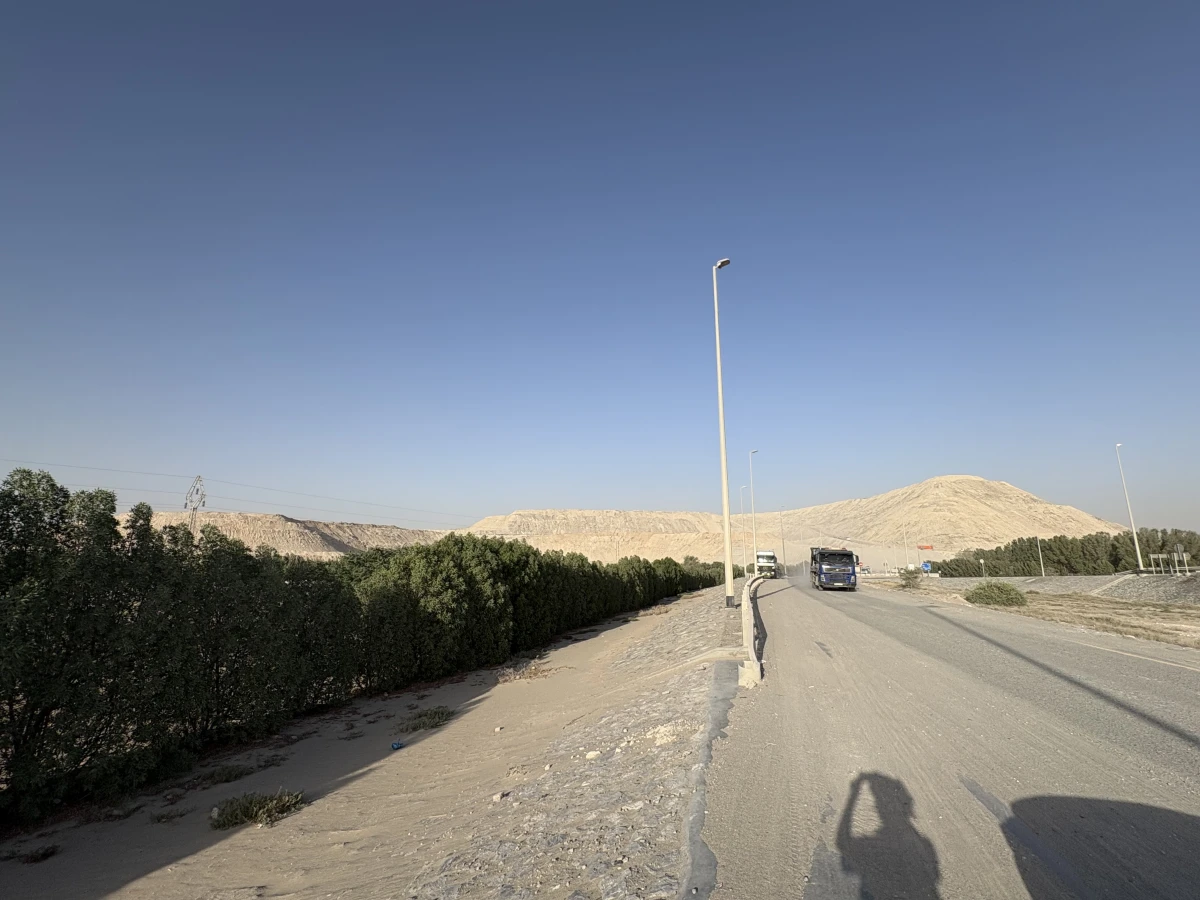
The potential to hyperscale
The scale of construction and demolition activity in the UAE creates the potential to move beyond individual pilot projects.
Once the technical and commercial model has been demonstrated, production could be replicated through suitable local partners and existing industrial sites. This distributed approach could allow Oxara to expand more rapidly than a model dependent on constructing and operating one large, centralized production facility.
Access to significant waste volumes also creates the possibility of producing at a scale capable of supplying mainstream construction applications. For Oxara, hyperscaling means building a repeatable system: identifying suitable material streams, qualifying regional producers, transferring the technology and connecting production to local demand.
The UAE could therefore become more than an additional sales market. It offers an opportunity to demonstrate how Oxara’s technology platform can be deployed at regional scale in a fast-growing construction economy.
The next phase will require close cooperation between public authorities, waste owners, mineral processors, material manufacturers, contractors, developers and investors. Connecting these actors can turn mineral demolition waste from a growing liability into a strategic resource.
Dubai’s continued development will require enormous quantities of construction materials. The opportunity is to produce more of those materials from resources the city already has.
Scaling together
We are looking for partners and investors who want to unlock the potential of circular construction materials in the UAE together with us.
Talk to us about partnership and investment opportunities.
Sources
[1] Dubai 2040 Urban Master Plan, official plan and executive summary. The plan forecasts Dubai’s resident population increasing from 3.3 million in 2020 to 7.8 million by 2040 and identifies five principal urban centres. http://dubai2040.ae/en/
[2] UAE Circular Economy Policy 2021–2031, UAE Government. The policy identifies infrastructure as a priority sector and states that construction and demolition waste accounts for approximately 70–75% of the total mass of solid waste produced in the UAE. https://assets.u.ae/api/public/content/0ddeb9f0bfce4c2f83e12d0f88b95512?v=2b82e618
[3] Dubai Integrated Waste Management Strategy 2021–2041, UAE Government. The strategy promotes innovation, recycling, waste conversion and long-term solutions to environmental challenges. https://u.ae/en/about-the-uae/strategies-initiatives-and-awards/strategies-plans-and-visions/environment-and-energy/dubai-integrated-waste-management-strategy-2021-2041
[4] Global Cement, overview of the UAE cement industry. This source documents the sector’s historically high installed capacity, competitive market conditions and export orientation. The current market situation and prevailing cement prices should be validated with a local industry partner before publication. https://www.globalcement.com/magazine/articles/917-the-growing-cement-industry-of-the-uae
Want to build something together?
Let’s talk – it starts with a message.